I love Greek philosophy!
Much of modern western philosophy is based Ancient Greek philosophy.
What thinkers like Plato and Aristotle wrote about love is probably the least understood part of their collection of writings by the modern, western masses. The obscene divorce rates in the United States alone might stand as confirmation of that thought.
Most people in western society today hold a concept of love that is incomplete, skewed, or misunderstood. I’m a little biased in what I’m about to write, given my opening sentence, but over the years, I happen to think the Ancient Greeks got the concept of love, in all of its forms, right.
The Ancient Greeks were wise in breaking down the concept of love into constituent parts in order to better understand that there are different kinds of love and that we should apply and transition our feelings of love in different ways, with different people, and in different situations.
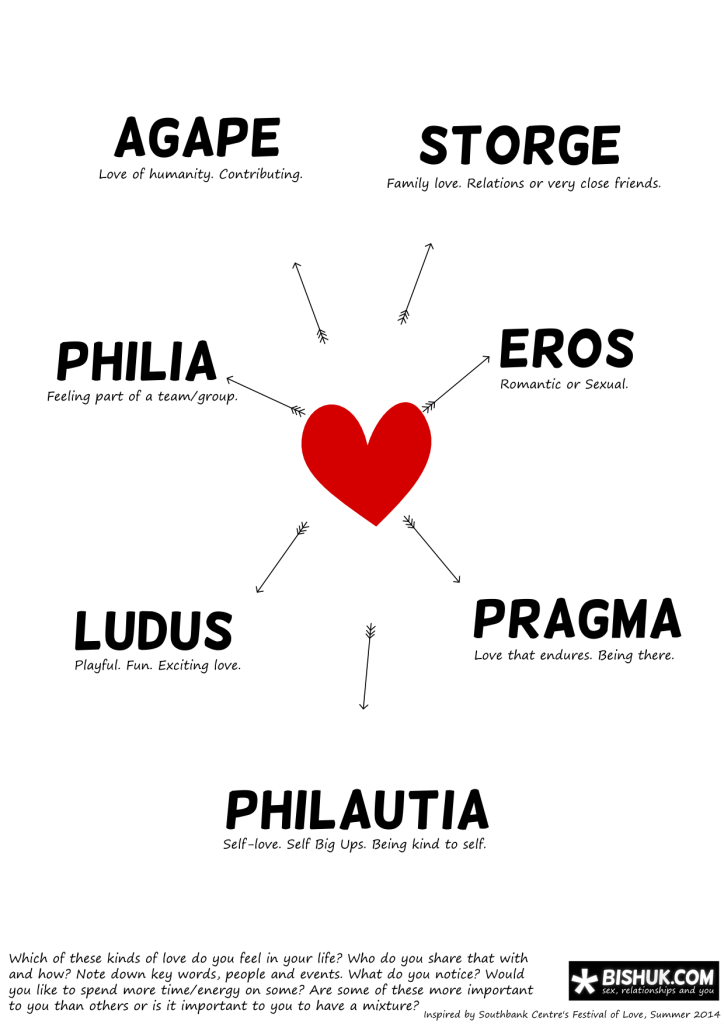
The graphic that opens this post pithily describes each of the seven types of love, but I wish to expand upon each and proffer my own interpretation of how to recognize and adjudicate each type in navigating life.
The ancient Greeks understood something about love that we often forget today: love isn’t one-size-fits-all. They recognized that love comes in many forms—romantic, friendly, familial, and even spiritual—and gave each type a distinct name.
In a world that tends to romanticize love as a single, all-encompassing feeling, understanding these seven types can help us build healthier relationships, stronger bonds, and a deeper sense of fulfillment.
⸻
1. Eros – Romantic, Passionate Love
Eros is the love of desire and attraction. It’s fiery, intoxicating, and often what we think of when we say we are “in love.”
• Why it’s important: Eros brings excitement and chemistry to romantic relationships. But the Greeks also saw it as powerful and potentially dangerous—because it’s easy to confuse passion with true connection.
• How to nurture it: Balance passion with trust and emotional intimacy, so love doesn’t burn out like a flame.
⸻
2. Philia – Deep Friendship Love
Philia is the love of true friendship—loyalty, trust, and shared values. Aristotle called it “the highest form of love,” because it’s based on mutual respect and admiration, not just fleeting emotions.
• Why it’s important: Strong friendships are the foundation of both romantic and platonic relationships. Without Philia, Eros can feel empty.
• How to nurture it: Invest time in friends who uplift you, and build relationships based on honesty and mutual support.
⸻
3. Storge – Familial Love
Storge is the love between parents and children, siblings, and even long-term companions. It’s natural, unconditional, and enduring.
• Why it’s important: Storge is the love that teaches us what security and acceptance feel like.
• How to nurture it: Appreciate the people who have been there for you through all stages of life—don’t take this steady love for granted.
⸻
4. Ludus – Playful Love
Ludus is flirtatious, fun, and carefree. It’s the love of teasing, dancing, and laughter—the kind that thrives on light-heartedness rather than deep commitment.
• Why it’s important: Relationships need playfulness to stay alive. Without joy and spontaneity, love can feel heavy.
• How to nurture it: Don’t let life’s stress steal your ability to play with your partner or friends.
⸻
5. Agape – Selfless, Universal Love
Agape is the highest form of love—the unconditional love for humanity, nature, or even a spiritual devotion. It’s selfless, giving, and without expectation of return.
• Why it’s important: Agape reminds us to live with compassion and kindness, which makes us better partners, friends, and humans.
• How to nurture it: Practice gratitude, empathy, and service to others without expecting anything back.
⸻
6. Pragma – Enduring Love
Pragma is practical, long-term love—the kind that comes from years of effort, compromise, and shared goals. It’s less about butterflies and more about a deep partnership that survives life’s challenges.
• Why it’s important: Pragma is what keeps relationships alive after Eros fades. It’s the love of commitment and loyalty.
• How to nurture it: Prioritize communication, shared values, and respect over fleeting feelings.
⸻
7. Philautia – Self-Love
Philautia is the love we have for ourselves. The Greeks understood that healthy self-love isn’t selfish—it’s essential for loving others fully.
• Why it’s important: Without Philautia, relationships suffer because we can’t give what we don’t have.
• How to nurture it: Treat yourself with the same kindness and forgiveness you offer others.
⸻
Why These Seven Types of Love Matter
Recognizing these different forms of love helps us:
• Appreciate relationships for what they are, instead of forcing them to be something they’re not.
• Avoid over-romanticizing love, which often leads to disappointment.
• Develop a balanced life, where we cultivate friendships, self-love, and compassion alongside romantic relationships.
We owe a lot to Greek philosophy. Their philosophy on love is an enduring example we should endeavor to follow.
-The Rational Ram
 The Rational Ram
