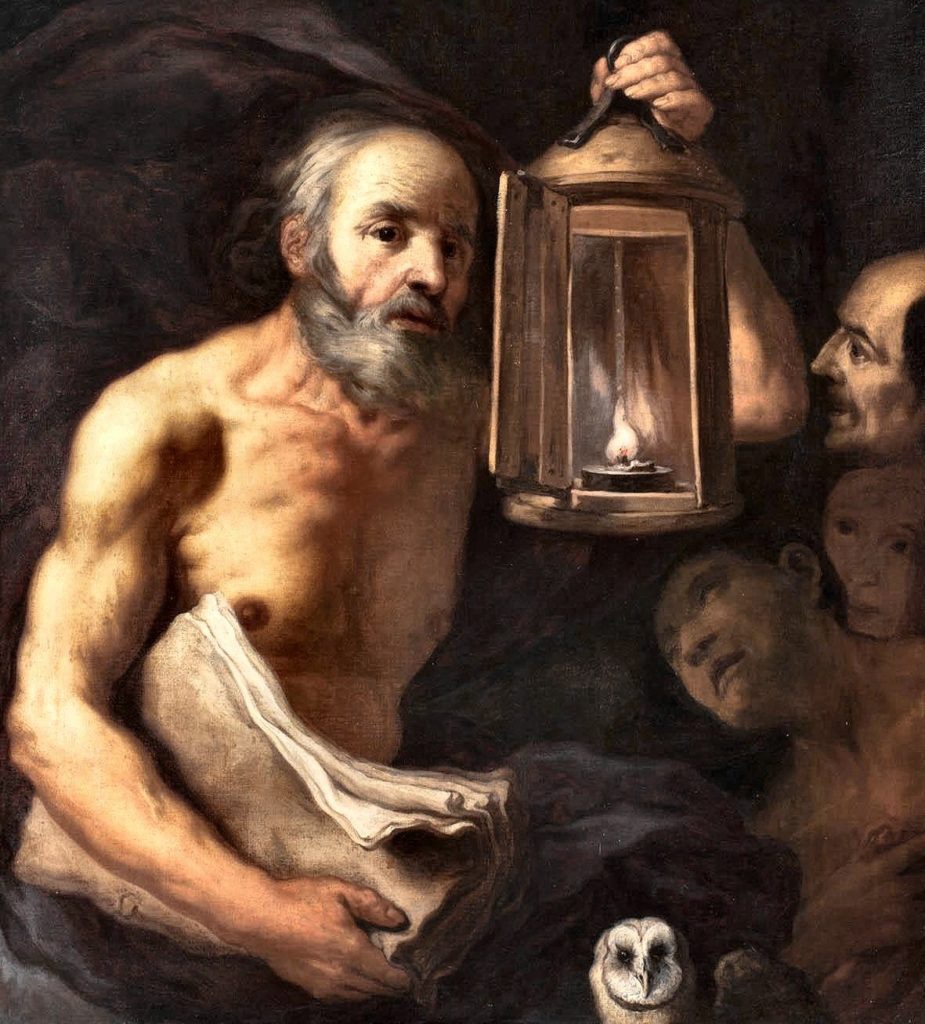
Diogenes of Sinope, the notoriously cynical philosopher, rarely missed an opportunity to strip human behavior down to its most self-interested core.
He mocked power, comfort, and even affection as disguises for utility. If you carry his worldview into gender dynamics, you arrive at a sharp and unsettling claim: women only value men they can use.
It’s a provocative idea, but does it hold up?
The Cynic’s Starting Point
Diogenes lived in a harsh world.
Life in ancient Greece was precarious—security, food, and social status often made the difference between survival and ruin. From his vantage point, relationships were never truly about love or virtue, but about leverage.
From that perspective, a woman’s attachment to a man could be explained simply: protection, financial security, and social status.
If he could not provide, why would she value him?
The Partial Truth in Utility
There’s no denying that utility plays a role in attraction and partnership. Humans are pragmatic creatures.
Across history and culture, men and women alike have looked for partners who bring value—whether that means resources, safety, emotional support, or the ability to raise children together.
Even today, many people unconsciously evaluate potential partners in terms of stability, ambition, and the ability to contribute to a shared life. In this sense, Diogenes wasn’t wrong to highlight the transactional element in human bonds.
The Limits of Cynicism
But cynicism only ever tells half the story.
It explains why some relationships form, but not why others endure.
If women only valued men for utility, we would never see love stories where people choose partners with little wealth, low status, or even major disadvantages. Yet such relationships are everywhere.
People fall in love with humor, with kindness, with someone’s way of seeing the world. Many women (and men) have walked away from materially “useful” partners in favor of someone who makes them feel understood, respected, and loved. That doesn’t fit neatly into Diogenes’ calculus.
Projection and Pain
It’s also worth asking who tends to embrace Diogenes’ claim most fervently. Often, it’s men who feel overlooked or used themselves.
When someone has been rejected, cheated on, or taken advantage of, cynicism becomes a shield. If you believe everyone is only out for themselves, you never have to risk being vulnerable again.
But the shield comes at a cost: it blinds you to the possibility of genuine connection.
A More Nuanced View
Human relationships are a blend of pragmatism and poetry.
Yes, we bring expectations and needs into them.
Yes, part of love is about exchange—time, effort, care, and support.
But reducing it to pure transaction misses the mystery of why people stay together even when it makes no practical sense.
The healthiest relationships are not about “use” but about reciprocity: two people who give because they want to, not because they’re calculating what they’ll get back.
Conclusion
So, was Diogenes right?
Only partly.
He rightly saw that utility plays a role in why we choose the people we do. But his mistake was to stop there, ignoring the depth, devotion, and irrational tenderness that make human love more than a transaction.
Modern society, influenced by the resurgence of such cynicism through social media and its “celebration” of transactional or performative “love,” has made people embrace transactional or performative love as the norm.
Cynicism can protect us from disappointment—but it can also starve us of hope.
A balanced view admits that while utility matters, it is not the whole story.
Love is more complicated, and far richer, than Diogenes would allow.
-The Rational Ram
 The Rational Ram