The Uncomfortable Economics Fans Don’t Want to Face
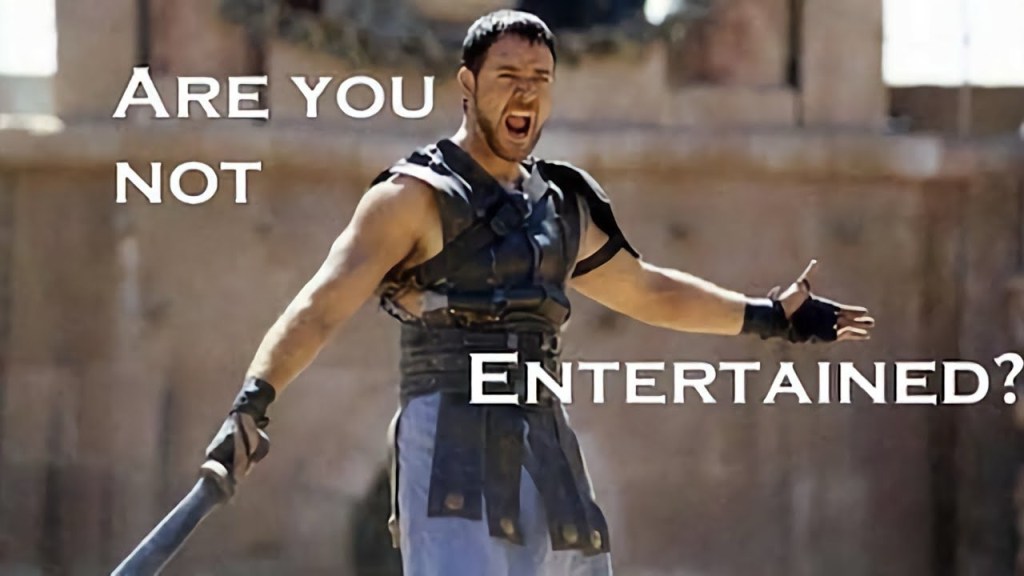
The claim that modern sports has become entertainment is often framed as an accusation—as if something pure was stolen.
But the truth is simpler and less conspiratorial…
If sports didn’t evolve into entertainment, it would collapse under its own economics.
Not because people are stupid.
Not because leagues are evil.
But because pure competition is not financially sustainable at scale.
1. Pure Competition Has a Very Low Ceiling
If sports were only about competitive purity, we’d still be watching and observing en masse:
- Local clubs
- Amateur leagues
- Regional rivalries
- Modest crowds
- Minimal pay
- Limited exposure
And these things still exist.
We know them as:
- College intramurals
- Minor leagues
- Semi-pro circuits
- Amateur athletics
These things ARE pure.
They are also:
Underfunded
Underwatched
Economically fragile
Purity doesn’t scale as well as entertainment.
2. Mass Audiences Require Narrative
Once you try to attract millions of viewers, something changes…
Most fans:
- Don’t understand strategy deeply
- Don’t follow every team
- Don’t watch every game
- Don’t care about random matchups
Only degenerate sports gamblers, a group growing larger by the day, do such things.
The average fan cares about:
- Stars
- Stories
- Stakes
- Emotion
- Familiar faces
Narrative isn’t manipulation—it’s translation.
It turns chaos into meaning.
Without it:
- Ratings drop
- Attention fragments
- Sponsorship dries up
- Salaries fall
- Leagues shrink
Ask the WNBA about the above, as they continue to struggle with establishing a narrative that sports fans can embrace about their league.
3. Star Power Is Not Corruption—It’s Economic Reality
Leagues do not survive on parity alone.
They survive on:
- Recognizable faces
- Marketable heroes
- Repeat villains
- Dynasty arcs
- Redemption stories
This isn’t unique to sports.
It’s how every entertainment industry works.
Movies don’t randomly cast leads.
Music labels don’t push unknowns equally.
Streaming platforms don’t promote everything the same.
Sports is no different.
Star protection isn’t about cheating.
It’s about protecting the product.
4. Officiating Imperfection Is the Price of Human Sport
Fans want:
- Faster games
- Fewer stoppages
- More emotion
- More flow
They also want:
- Perfect officiating
- Total consistency
- Zero controversy
Fans can’t have both. They are completely incompatible.
Fully automated, perfectly enforced sports is what we often see in amateur, high school, and even college sports:
- Slow
- Clinical
- Over-reviewed
- Emotionally flat
Human judgment, even when errors in that judgment are intentionally overlooked or downplayed, keeps sports alive, even when it frustrates us.
The chaos is part of the appeal. It’s also part of the show…
5. Gambling Didn’t Corrupt Sports—It Exposed What Was Already There
Betting didn’t turn sports into entertainment.
It simply:
- Monetized attention
- Quantified uncertainty
- Made outcomes financially legible
- Brought invisible incentives into the open
The unpredictability people bet on?
That unpredictability is the entire reason sports are watched.
A completely fair, perfectly predictable league would be:
- Solved by the majority of fans
- Boring
- Financially dead
6. Fans Don’t Actually Want Pure Fairness
This is the hardest truth and the lynchpin that the leagues and their media partners count on for their bottom line…
Fans say they want fairness. But they behave differently.
They:
- Celebrate rival injuries
- Defend calls favorable to their team
- Justify wins they benefited from
- Rage only when outcomes go against them
What fans really want is:
Their brand of “fairness”
Entertainment gives them something better:
- Drama
- Hope
- Heartbreak
- Identity
- Belonging
That’s not deception. That’s participation.
It’s also why people are so resistant to seeing and denying the showbiz and gaming manipulations that make it entertaining.
7. Athletes Benefit from the Entertainment Model Too
Without entertainment economics:
- Salaries plummet
- Careers shorten
- Exposure shrinks
- Medical advances disappear
- Post-career opportunities for athletes vanish
The modern athlete exists because sports became a product.
That doesn’t cheapen competition.
It funds it.
8. Sports Isn’t Fake—It’s a Hybrid
Modern sports is:
- Real effort
- Real skill
- Real consequences
Inside a system that:
- Markets emotion
- Shapes narratives
- Sells moments
- Curates chaos
That’s not a lie.
It’s a compromise.
And without it, professional and collegiate sports wouldn’t exist as we know them today.
Final Thought: The Question Isn’t “Is Sports Entertainment?”
It is obvious that sports is entertainment. To argue otherwise is illogical.
The real question is:
Would you actually watch if it weren’t?
Most people wouldn’t.
And that’s okay.
Because sports doesn’t have to be pure to be meaningful.
It just has to be honest about what it is. And so do we.
-The Rational Ram
 The Rational Ram