A Side-by-Side Reality Check (Using Baltimore as the lens & Why Cities Never Love You Back)
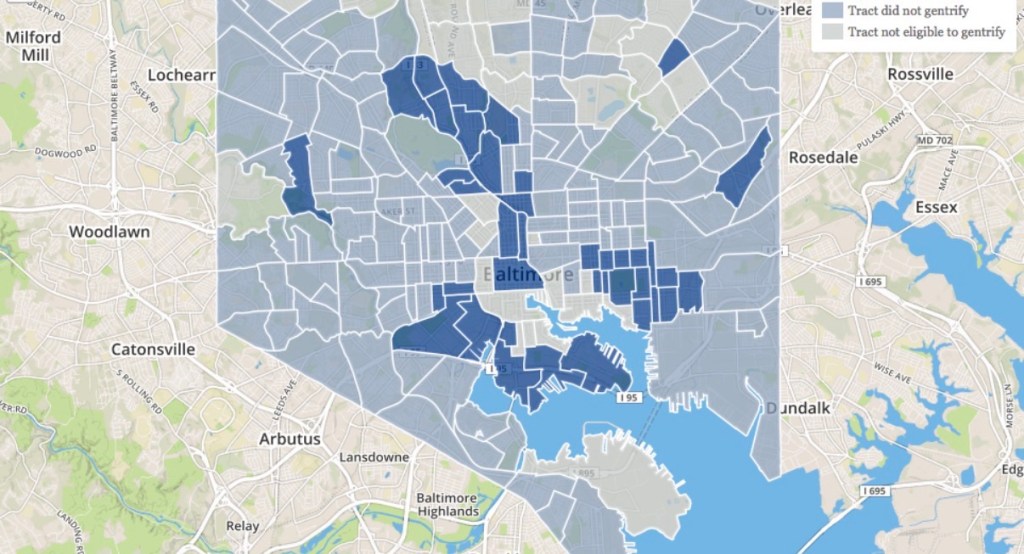
I live within a “stone’s throw” from Baltimore. It’s no secret to those that live in and around Baltimore that the city has undergone extensive changes due to gentrification over the past two decades. A process that continues unabated as of this writing.
I have gotten away from posting political content, and this post doesn’t delve into politics, per se.
This post examines gentrification, or the restoration and upgrading of deteriorated urban property by middle-class or affluent people, often resulting in displacement of lower-income people.
This post examines gentrification through the lens of Stoicism in an effort to separate the emotional reactions that often distort the reality that even the people displaced by gentrification should accept and adapt themselves to in order to survive and thrive within the realities of the situation.
First, the emotional reactions that often color the political debate around gentrification.
Emotional Reaction
- “They stole our neighborhood.”
- Anger at newcomers
- Nostalgia as proof of entitlement
- Blame politicians after displacement
- Moral outrage
- “This isn’t fair.”
- Protest the outcome
- Identity fused to place
- Shock at rising costs
- Demand permanence
Stoic Reaction
- “This place was borrowed, not owned.”
- Curiosity about capital flows
- Memory acknowledged, not weaponized
- Anticipate incentives before arrival
- Strategic detachment
- “This is predictable.”
- Prepare for the cycle
- Identity independent of place
- Expect repricing as a law
- Design for impermanence
Stoic takeaway:
Pain intensifies when expectation contradicts reality.
Clarity reduces suffering before it arrives.
🧩 Why Cities Never Love You Back
Cities don’t love you.
They use you.
Not maliciously.
Impersonally.
A city is not a community with feelings.
It is an engine—built to convert land, labor, and attention into revenue.
1) The Attachment Error
People say:
“This city raised me.”
What’s actually true is that:
- You paid rent
- You paid taxes
- You provided labor
- You added cultural value
That isn’t love.
That’s an economic exchange.
Cities remember revenue, not residents.
2) What Cities Reward (And What They Ignore)
Cities reward:
- Capital inflow
- Tax base expansion
- Brand safety
- External investment
Cities ignore:
- Loyalty
- Endurance
- Memory
- Suffering without leverage
A decade of staying in one neighborhood in one city, even through multiple generations, doesn’t beat a year of higher returns.
3) Why Belonging Feels Real (Until It Doesn’t)
Belonging is a human invention layered onto a financial system.
It feels permanent because:
- Schools repeat the story
- Churches reinforce it
- Neighbors echo it
- Media romanticizes it
But markets don’t feel stories.
They put a price them.
4) The Quiet Switch Cities Flip
For years:
“There’s no funding.”
Then virtually overnight:
- Incentives appear
- Zoning changes
- Enforcement increases
- Branding (the corporate kind) arrives
Nothing changed morally.
Only the profitability factor of the area did.
5) Why Righteous Anger Misses the Point
Anger assumes betrayal.
But betrayal requires a promise.
Cities never promise anyone:
- Stability
- Affordability
- Permanence
For political purposes, a city’s leaders may imply these things as promised…
However, they only ever promise opportunity—and opportunity is always conditional.
6) The Stoic Reframe That Saves You
A Stoic doesn’t ask:
“Why did this happen to us?”
He asks:
“What conditions made this inevitable?”
Then he:
- Detaches his identity from his current address
- Converts nostalgia for his current neighborhood into planning for the inevitable collapse
- Treats his residence as a strategy, not a destiny
7) The Line That Ends the Illusion
Cities don’t love you back because they can’t.
They don’t hate you either.
They respond to incentives—and they always will.
Final Thoughts 💭
You didn’t lose your city.
You outgrew the illusion that it was yours.
Belonging is emotional.
Ownership is financial.
And permanence is a story we tell ourselves when the rent hasn’t gone up yet.
-The Rational Ram
 The Rational Ram