Why a man who doesn’t care about luxury still ends up wanting one
There’s a strange place you arrive at after you survive something serious.
For me, it was open-heart surgery (coronary artery bypass graft x3) and two new knees (bilateral total knee replacement).
You don’t come out of that crucible thinking about watches.
You come out of it thinking about time.
Not in the abstract sense. Not “time flies.”
You think about time as something that can be taken from you—and then, unexpectedly, given back.
And once that happens, you start looking for ways to hold onto it. Even in a symbolic sense.
I didn’t suddenly become a “watch guy.”
I spent 23 years of my adult life serving our country in the United States Army. I didn’t wear “nice” watches for obvious reasons.
Not that I didn’t appreciate nice watches. Buying and wearing anything other than cheaper Casio G-Shocks simply wasn’t practical.
Like Corvettes, which I eventually bought and have been driving for 20 years, owning a Rolex is a lifelong dream, but not one I was ever in a hurry to fulfill.
Yes, I know that buying a Rolex is often seen one of two ways. As a shallow status flex for external validation or as an internal “I made it” symbol.
I’ve never cared about impressing people.
Most people don’t even notice what’s on your wrist anyway.
What changed is this:
I started caring about what things mean.
A watch is a strange object.
It doesn’t make you more money.
It doesn’t make you stronger.
It doesn’t make you smarter.
But it does one thing nothing else quite does:
It puts time in your hand.
That’s where my internal conflict comes in.
Because the watch that aligns with me—the one that feels right—is not cheap.
And that bothers me.
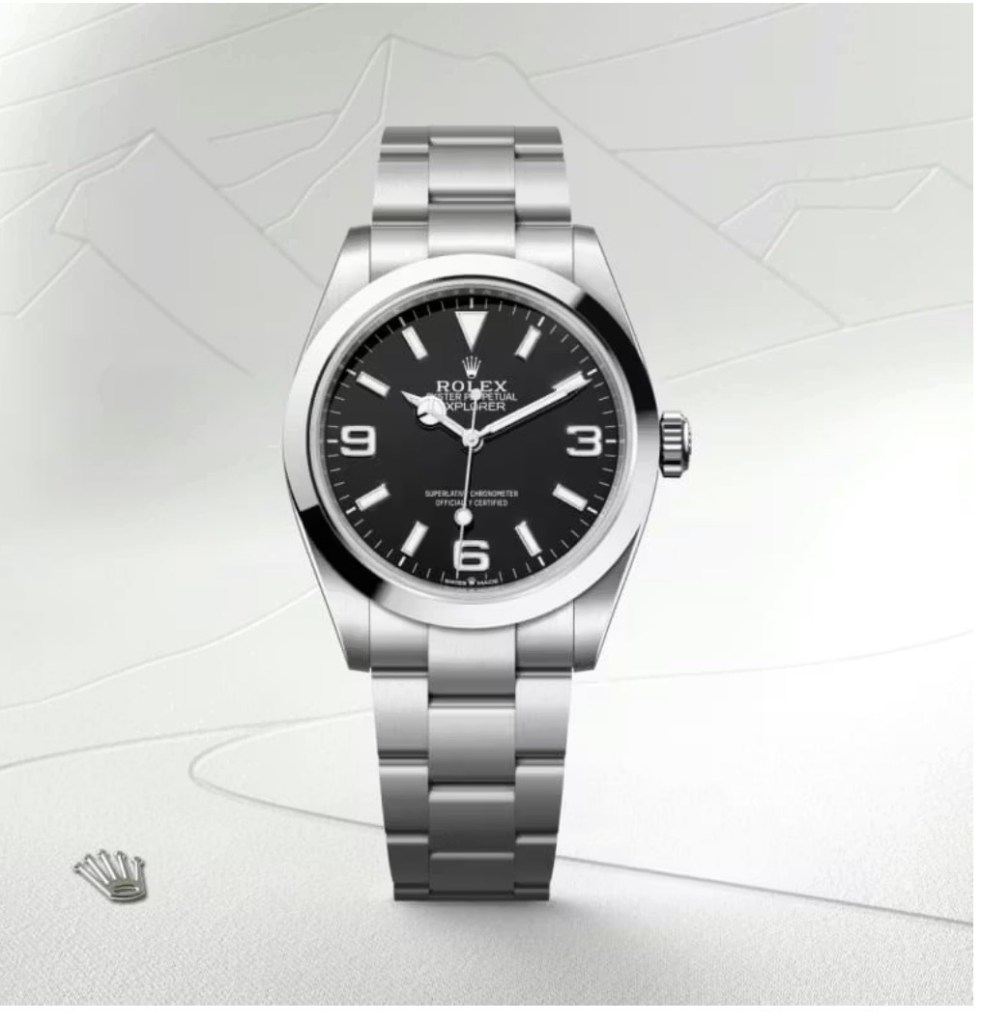
Not because I can’t afford it, and yes, the watch in the picture that opens this post is the watch I am looking at.
But because I’ve spent a lifetime believing that paying thousands of dollars for a watch doesn’t make sense.
And on paper, it doesn’t.
But alignment isn’t about paper.
It’s about reality.
If you strip away the Rolex brand, the Rolex marketing, and the Rolex noise, what’s left is this:
A simple, durable, purpose-built object.
No flash.
No excess.
No nonsense.
Something that just works.
That’s what I recognize.
Not the famous crown logo.
Not the luxury price.
The philosophy.
So the question isn’t:
“Why would I spend that much on a watch?”
The question is:
“Why does the one object that represents how I see the world happen to cost that much?”
There’s no clean answer to that.
And maybe there doesn’t need to be.
Because at some point in life, you realize:
You’re not buying an object, in this instance a watch.
You’re marking a moment.
And the real decision becomes simple:
Do I need it?
No.
Does it align with me?
Yes.
And sometimes, that’s enough.
-The Rational Ram
 The Rational Ram